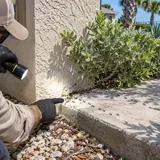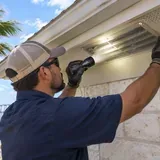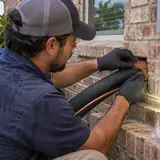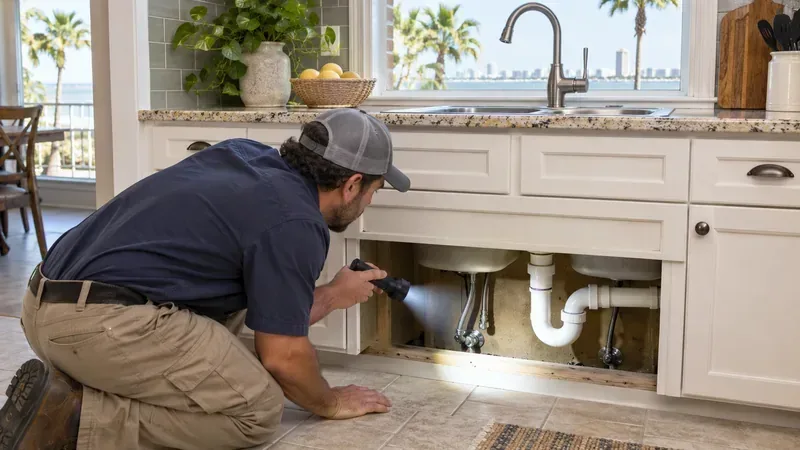
The location of repeated sightings matters.
Record whether cockroaches appear near appliances, under a sink, beside an exterior door or across several rooms. In an apartment, shared pipes and service spaces can change the investigation. The aim is to distinguish an occasional entry from activity established inside, then match preparation and monitoring to those findings.
- Sightings around appliances or cabinets
- Activity after dark in kitchens or bathrooms
- Repeated sightings in several rooms
Keep a record of the location, timing and any change in the pattern. These observations help focus an assessment; they do not establish the cause on their own.
What the assessment covers
A useful assessment distinguishes outdoor visitors from indoor breeding activity. Look at the distribution of sightings, moisture sources, food storage, clutter and access around pipes. In shared buildings, an individual unit may be only part of the picture.
- Species identification and a record of the rooms affected.
- Accessible food, moisture and concealed shelter near repeated sightings.
- Coordination of preparation, targeted work and follow-up monitoring.
Ask for the findings in writing, including the locations checked and any area that could not be accessed. If further investigation is needed, its purpose and scope should be clear before it is arranged.
From findings to an agreed plan
The plan should identify the affected spaces and explain preparation for targeted work. A baiting, monitoring or treatment approach depends on the findings. Coordinate with a property manager when access to adjoining units or shared service spaces is relevant.
Before work begins
Confirm the affected areas, preparation, access and proposed work. Ask which tasks are included, which need separate approval and whether another specialist is required. Keep the scope and any written terms with the service record.
Corpus Christi property details that matter
A home near the bay and a house farther inland may have different entry points, drainage and surrounding vegetation. In Corpus Christi, an assessment should start with the property itself: doors, utility penetrations, garage edges, screened spaces and the places where moisture collects. Around a bay-side lot, the Cockroach control in Corpus Christi, TX notes for this household add one local detail: the filter, the return, and the supply in that room are looked at together.
Rain can leave water in plant saucers, containers and blocked gutters. Corpus Christi’s mosquito guidance emphasizes removing standing water, so a mosquito conversation should include habitat around the property as well as the insects currently being noticed. Around Flour Bluff, the Cockroach control in Corpus Christi, TX notes for this household add one local detail: a wet ceiling, a full pan, or a door that sticks is recorded on its own line.
Share the exact address, including any separate building or shared space involved. The local area guide lists useful neighborhood and ZIP references. Give us your address and we tell you whether we can come and when.
After the visit
Monitoring helps show whether activity is reducing or moving. Keep food contained, report leaks and follow the preparation instructions. A single quiet evening does not establish that every hidden area has been resolved.
Compare later observations with the original concern. Record where the activity or symptom appears, when it happens and what has changed since the work. That gives the follow-up conversation a useful starting point.
For rented or shared properties, make sure the person responsible for access and repairs receives the findings. Keep pest work, equipment repair and any separate building work clearly assigned.
Discuss cockroach control for your property.
Start with the information you have. You can choose this service in the enquiry form and add the location, timing and access details.
Request this serviceReturn to Corpus Christi Pest Control